






How Are Digital Transformation Processes Evolving with Low-Code Platforms?
Throughout digital transformation processes, one of the biggest challenges organizations face is managing rising software development costs while simultaneously meeting the demand for speed and agility. Traditional software development models often struggle to achieve this balance due to long project timelines and heavy reliance on highly skilled human resources.
At this point, Low-Code platforms emerge as a strategic technology that reduces the Total Cost of Ownership (TCO) in digital transformation initiatives.
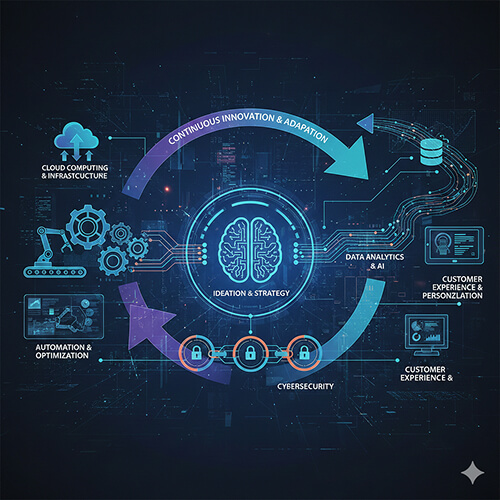
Key Factors Determining Software Costs in Digital Transformation Processes
In digital transformation processes, costs are not limited to licensing fees alone. The true cost is the sum of the following components:
- Development time and human resource costs
- Testing, maintenance, and versioning expenses
- Integration and customization efforts
- Indirect costs caused by operational inefficiencies
Low-Code platforms directly impact all of these cost drivers.
Shortening Development Cycles in Digital Transformation Processes
Low-Code platforms accelerate software development through visual modeling, pre-built components, and reusable services.
From a technical perspective:
- UI, business rules, and workflows are abstracted
- Repetitive coding efforts are eliminated
- CI/CD processes become simpler and more efficient
As a result, project timelines within digital transformation processes are significantly reduced, development costs decrease, and overall development team productivity increases.
Optimizing Human Resource Costs with Low-Code
In traditional development approaches, the need for senior developers represents a critical cost factor. Low-Code platforms, however:
- Enable business analysts and process owners to actively participate in development
- Reduce the workload per developer
- Allow large-scale projects to be delivered with smaller, more efficient teams
This approach helps digital transformation processes protect IT budgets while reducing dependency on scarce technical resources.
Reducing Maintenance, Upgrade, and Technical Debt Costs
Thanks to their centralized architecture, Low-Code platforms:
- Standardize version management
- Handle security updates at the platform level
- Minimize code complexity and technical debt
Consequently, the common challenge of “insufficient budget for maintenance” in digital transformation processes is largely eliminated.
Operational Cost Advantages Through Integration Capabilities
Modern Low-Code platforms offer out-of-the-box integration capabilities with ERP, ITSM, ITAM, CRM, monitoring systems, and third-party APIs.
These technical advantages:
- Reduce manual data entry
- Enable event and process automation
- Lower operational error rates
Therefore, digital transformation processes optimize not only IT costs but also the operational expenses of business units.
Rapid Adaptation to Changing Business Requirements
One of the most common risks in digital transformation processes is the need to redevelop software due to evolving business requirements. Low-Code platforms address this challenge by:
- Enabling rapid revisions through parameterized structures and visual modeling
- Eliminating the need to rebuild applications from scratch
This prevents unpredictable development costs in the long term.
The Impact of Low-Code on Total Cost of Ownership in Digital Transformation Processes
In summary, Low-Code platforms:
- Shorten development cycles
- Optimize human resource costs
- Reduce maintenance and integration expenses
- Increase operational efficiency
For these reasons, within digital transformation processes, Low-Code is not merely a development tool—it is a strategic cost management approach.